
Something to know Ganesh chaturthi
Something to know Ganesh chaturthi
Ganesh chaturthi also known as Vinayak chaturthi is a vibrant Hindu festival celebrating the birth of Lord Ganesh, the elephant headed deity revered as the remover of obstacles, the god of wisdom, prosperity and new beginnings.Ganesh Chaturthi is celebrated on the Bhadra shukla chaturthi.
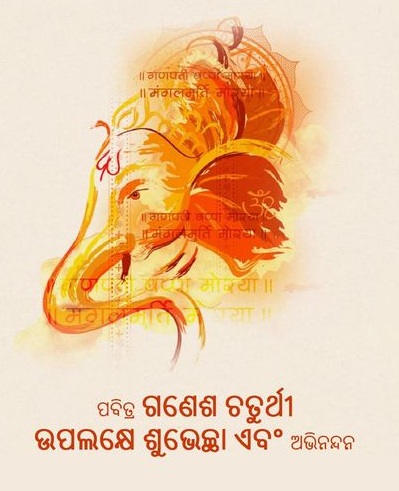
This corresponds to the fourth day of the waxing phase (shuklapaksha) of the month of Bhadrapada in the Hindu calendar.
Ganesh chaturthi is one of those celebration that instantly lights up every Indian home, no matter where you are in the world.
The moment lord Ganesh arrives, the whole vibe changes,more joy, more devotion, and definitely more modaks.
Lord Ganesh is the younger son of lord Shiva and Goddess parvati, according to Hindu mythology.
It is believed that the festival eliminates any barrier from human life and brings harmony and prosperity. There are 108 distinct namea of lord Ganesh and he is lord of arts and sciences and the Deva of knowledge.
The festival is mostly celebrated in many parts of India.
Primarily in States such as Maharashtra, Goa, Kerala and Tamil Nadu, though North India has also been increasingly involved in worshipping this deity.
It is a 10 day celebration denoting the arrival of Ganesh on earth, the lord of success and knowledge. It starts on the 4th day (Chaturthi) of the Hindu month of Bhadrapada (August – September).On the first day of this celebration,statues(murtis) of Ganesh are placed or installed on raised platforms in small shrines(mandaps) in homes or in elaborately decorated public shrines (pendals).
Thousand of devotees chants of Ganapati Bappa morya and after its installation, perform a ceremony to invoke his holy presence in to the stàtue.This rituals is called the pranapratistha, during which a number of mantras are recited, a special worship ceremony is performed offerings of different types of sweet, flower, rice, coconut, jaggery and coins are made, and the statue anointed with red chandan (sandalwood) powder.
For the next 10 days the Idol is worshipped every day and an arti is sung in the evening.It is believed that lord Ganesh was born at midday, and consequently it is considered to be the most auspicious time of the day for performing the rituals.
The culmination of this festival on the 11th day is a spectacular event.On the last day of festival Ananta chaturdashi, the statues are paraded through the strects admist singing and dancing, and then immersed in the ocean or other water bodies.The immersion of the statues and their subsequent destruction reinforces the belief that the universe is in a constant state of change, and eventually gives away to formlessness. The chant of Ganapati Bappa Morya fills the air as the devotees bid farewell and pray for the deity’s early return the following year.
Ganesh chaturthi is celebrated traditionally in most state of India the fervour with which it is celebrated in the state of Maharashtra is unparalleled.Interestingly, it was not a significant part of Maharashtra’s tradition until it’s advent here during the maratha reign.Bal Gangadhar Tilak (1856-1920) a noted leader of the Indian independence movement. Who was instrumental in converting Lord Ganesh into a powerful cultural and religious symbol of unity for the maharashtrian people in an attempt to resist the British rule.In 1893 Bal Gangadhar Tilak reinvented the Ganesh chaturthi, converting it from an annual family celebration to a full-fledged public event
In Maharashtra, the Lalbaugcha Raja sarvajanik Ganeshostsav mandal, founded in 1934, is of the most famous and most visited Ganesh pandals.It is believed that in the city of Mumbai alone, more than 150,000 statues are immersed every year.