
Why Does Maa Durga Have 10 Hands? Hidden Meaning Explained
Navratri Special: Why Does Maa Durga Have 10 Hands? The Hidden Meaning Explained
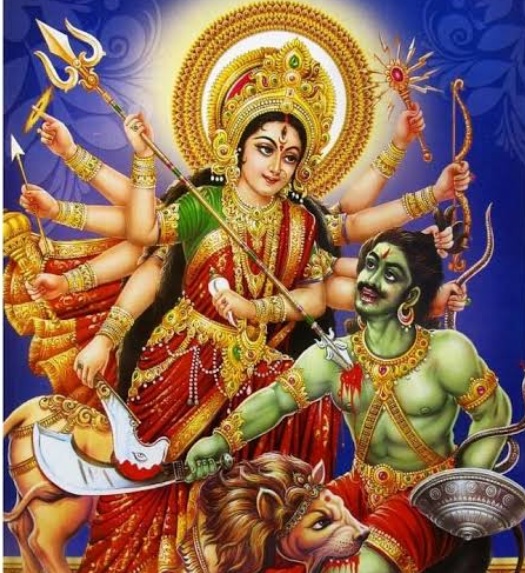
During Navratri, millions of devotees worship Maa Durga, the divine mother who represents strength, courage, protection, and the victory of good over evil. One of the most fascinating features of her divine appearance is her ten hands, each carrying a different weapon or sacred object.
But why does Maa Durga have ten hands? What do they symbolize, and what hidden spiritual message do they convey?
Let us explore the religious significance, symbolism, and deeper meaning behind the ten hands of Maa Durga.
Why Does Maa Durga Have 10 Hands?
Maa Durga is commonly depicted with multiple arms to represent her extraordinary divine power and her ability to protect the universe from evil forces. In many popular depictions, she has ten hands holding weapons and sacred objects associated with different gods.
According to Hindu tradition, the gods provided their divine powers and weapons to Durga to help her defeat the powerful demon Mahishasura. Armed with these gifts, she fought against the demon and ultimately restored the balance between good and evil.
Her ten hands therefore symbolize divine strength, protection, courage, and the ability to overcome many challenges simultaneously.
The number of arms can vary across regional traditions and artistic representations. The ten-armed form is especially familiar in Durga Puja celebrations in eastern India, including Odisha and West Bengal.
The Hidden Meaning of Maa Durga’s Ten Hands
Each hand and its associated object can carry a symbolic meaning. The exact objects and interpretations vary among traditions, but together they represent the many qualities needed to overcome evil and protect righteousness.
1. Trishul (Trident) — Power Over Evil
The trident is one of Maa Durga’s most recognizable weapons. Associated with Lord Shiva, it represents divine power and the destruction of negative forces. Spiritually, it can remind devotees to overcome harmful thoughts, ignorance, and destructive habits.
2. Sudarshan Chakra — The Power of Righteousness
The divine discus is associated with Lord Vishnu. It symbolizes the power to destroy evil and restore cosmic order. Its circular form can also remind us that time continues to move and that our actions have consequences.
3. Sword — Wisdom and Discernment
The sword represents the strength to cut through ignorance, confusion, and falsehood. Its spiritual message is that wisdom and clear judgment help us distinguish right from wrong.
4. Bow and Arrow — Focus and Determination
The bow and arrow symbolize concentration, discipline, and the ability to direct one’s energy toward a meaningful goal. Just as an arrow needs accurate aim, our efforts require patience and determination.
5. Conch Shell — The Call to Awakening
The conch, or shankha, is associated with auspiciousness and the sacred sound used in Hindu worship. It symbolizes spiritual awakening, the spread of divine truth, and the call to follow a righteous path.
6. Lotus — Purity and Spiritual Growth
The lotus represents purity, beauty, and spiritual development. Growing in muddy water while remaining beautiful, it reminds us that we can maintain our values even when surrounded by difficulties.
7. Mace — Strength and Justice
A mace, when included in a depiction, symbolizes physical strength, authority, and the power to uphold justice. Its deeper message is that strength should be used responsibly to protect others rather than to oppress them.
8. Shield — Protection and Courage
In representations where a shield appears, it represents defence against harmful forces and the protection of the innocent. It reminds devotees to develop courage while remaining mindful of their responsibilities.
9. Abhaya Mudra — Fearlessness and Protection
Some depictions show Maa Durga’s hand raised in the abhaya mudra, a gesture of reassurance and fearlessness. It conveys the message that devotees should face life’s difficulties with faith, courage, and confidence.
10. Varada Mudra — Blessings and Compassion
The varada mudra is a gesture of generosity and blessing. It symbolizes compassion, kindness, and the willingness to help those in need. It reminds devotees that true power should be accompanied by love and generosity.
Important note: These ten descriptions are a symbolic guide, not a universal inventory of every ten-armed Durga image. The objects held in her hands vary by scripture, region, and artistic tradition.
What Does Maa Durga’s Ten-Armed Form Teach Us?
Beyond the weapons and sacred objects, Maa Durga’s ten-armed form offers several lessons for everyday life.
- Courage: Face challenges without surrendering to fear.
- Wisdom: Make decisions with knowledge and careful judgment.
- Self-discipline: Stay focused on your goals.
- Compassion: Use your strength to help others.
- Protection: Stand against injustice and defend those who are vulnerable.
- Balance: Combine determination with kindness and responsibility.
Her many arms are a visual representation of divine power working in different ways to protect the world and restore harmony.
The Connection Between Maa Durga and Mahishasura
The story of Maa Durga and Mahishasura is central to many Navratri and Durga Puja traditions.
Mahishasura, a powerful demon, received a boon that made him difficult to defeat. When he threatened the gods and disrupted cosmic order, the divine powers of the gods united to create Goddess Durga.
Equipped with divine weapons, she fought Mahishasura and eventually defeated him.
This victory is celebrated as the triumph of good over evil. On a spiritual level, Mahishasura can also be understood as a symbol of negative qualities such as arrogance, greed, anger, and ignorance. Durga’s victory encourages devotees to overcome these qualities within themselves.
Why Is Maa Durga Especially Worshipped During Navratri?
Navratri is a Hindu festival dedicated to the worship of the Divine Mother. The name combines nava, meaning nine, and ratri, meaning nights.
During these nine nights, devotees worship forms of Goddess Durga according to their regional and family traditions. Many observe fasting, offer prayers, perform devotional songs, and participate in cultural celebrations.
The festival concludes with Vijayadashami, also known as Dussehra in many regions, which celebrates the victory of good over evil. In several eastern Indian traditions, Durga Puja culminates in celebrations of Maa Durga’s victory over Mahishasura.
The festival encourages spiritual reflection, devotion, self-control, and the renewal of positive values.
Why Does Maa Durga Ride a Lion or Tiger?
Maa Durga is commonly depicted riding a lion, while some traditions and artistic representations show her with a tiger.
The lion is often interpreted as a symbol of courage, strength, and royal authority. The tiger can similarly represent power and fearlessness.
Her control over this powerful animal symbolizes the ability to govern one’s instincts, direct one’s strength wisely, and face difficulties with confidence.
Together, her mount, weapons, and many arms create a powerful image of divine protection and the victory of righteousness.
The Spiritual Message Behind Maa Durga’s Ten Hands
The ten hands of Maa Durga are not simply a visual display of power. They express the belief that divine strength can take many forms: wisdom, courage, discipline, protection, compassion, and justice.
Her image teaches us that overcoming evil requires more than physical strength. It also requires a pure heart, a clear mind, self-control, and a commitment to doing what is right.
During Navratri, devotees can reflect on these qualities and try to bring them into their daily lives.
Conclusion
Maa Durga’s ten hands represent her divine power, her ability to protect the universe, and the many qualities needed to defeat evil. Her weapons symbolize strength and the destruction of negative forces, while objects such as the lotus and gestures of blessing express purity, compassion, and reassurance.
As we celebrate Navratri, the deeper message of Maa Durga’s ten-armed form is to face fear with courage, ignorance with wisdom, injustice with strength, and hatred with compassion.
May Maa Durga bless everyone with peace, happiness, courage, and prosperity.
Jai Maa Durga! Shubh Navratri!