
Samba Dashami 2027 Dates Rituals
Samba Dashami 2027 Dates Rituals
Samba Dashami in 2027 is observed on January 18, 2027
A festival unique to Odisha, observed on the 10th day (Dashami) of Shukla Paksha in Pausha Masa usually in December-January.
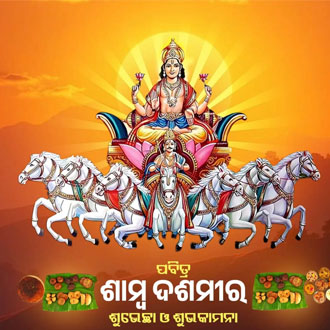
It is dedicated to Surya, the Sun God, and is mainly observed by mothers and women of the household who pray for the health, long life and protection of their children.
The Story of Samba
Samba was the son of Lord Krishna and Jambavati.
According to legend, Samba once insulted Sage Narada. Angered, Narada cursed him with leprosy (kushta roga).
Remorseful and suffering, Samba sought his father’s guidance.
Narada himself then advised him to worship Surya at Mitravana, near Chandrabhaga / Konark, to be cured.
Samba performed severe penance to Surya for 12 years and was finally cured of leprosy.
The day he was cured is remembered as Samba Dashami. In gratitude, Samba is also believed to have built the temple to Surya at Konark.
That is why, even today, mothers follow Samba’s example praying to Surya to keep their children free from disease.
Rituals How it is observed
1. Early morning preparation
Women wake before sunrise, bathe, clean the house and courtyard, and draw beautiful white jhoti / alpana (rangoli) often with a sun motif in the centre.
2. The morning offering Udaya Manda
At sunrise, special food is prepared and offered to Surya facing east. Traditional items include:
Khichdi
Odia puri / puli
Ghadghadia tarkari – a mixed vegetable curry
Pitha – fried cakes, kakara, manda, arisa
Kheer, sweets, fruits – banana, apple, pomegranate, coconut, dates
Milk, puffed rice, and seasonal vegetables like radish and brinjal
The offerings are placed on banana leaves or brass thalis, along with a lit diya, incense, flowers, and a decorated coconut / kalash. Many families do this on the rooftop, courtyard, or near the Tulsi plant so the first rays of the sun fall on the bhoga.
3. Midday Puja at the Tulsi Chaura
Around noon, women take a bowl of turmeric water with betel nut to a small altar – often the Tulsi Vrindavan decorated with flowers and Tulsi leaves on top.
There they offer arghya, light lamps, and pray again.
4. Reading the Brata Katha
The Samba Dashami Brata Katha the story of Samba’s curse, penance and cure is read aloud. Women listen with devotion and pray for the wellbeing of all family members.
5. Fasting and feasting
Many women observe a fast till the puja is complete. After the offering, the bhoga becomes prasad and is shared with the whole family.
It is a day of togetherness – mothers, daughters-in-law, and elders cooking together.
women in saris sitting around elaborate leaf-plate offerings, reciting from Odia scripture, and ending with namaskar to the sun.
At Konark, a special Surya Rath Yatra is also held, with devotees pulling a chariot from Ananta Abadhuta Mutt to Chandrabhaga beach.