
Jharkhand GK Topics Basic Facts
Jharkhand GK Topics Basic Facts
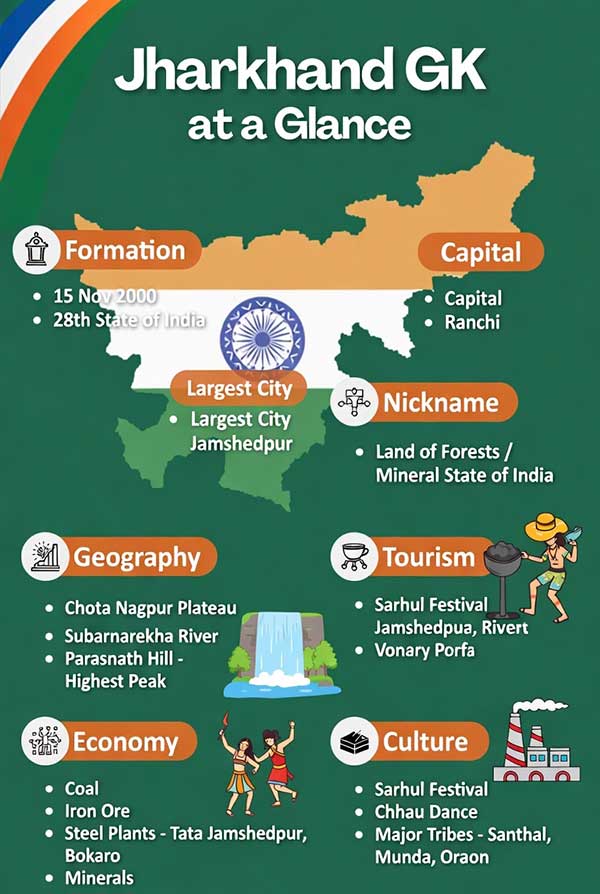
1. Formation and Basic Facts
- Formation Date: 15 November 2000 (carved out of southern Bihar as the 28th state of India).
- Capital: Ranchi.
- Largest City: Jamshedpur (industrial hub).
- Area: 79,716 sq km (15th largest state).
- Population: Approx. 3.3 crore (2011 census; around 4+ crore estimated now).
- Official Language: Hindi (other languages: Santhali, Mundari, Ho, Nagpuri, etc.).
- Nickname: “Land of Forests” or “Mineral State of India”.
- Statehood Day: 15 November (birth anniversary of Birsa Munda).
2. Geography
- Location: Eastern India, part of Chota Nagpur Plateau.
- Borders: Bihar (North), West Bengal (East), Odisha (South), Chhattisgarh (West), Uttar Pradesh (Northwest).
- Major Rivers: Subarnarekha, Damodar, Barakar, South Koel, Brahmani, Kharkai, Sankh.
- Highest Peak: Parasnath Hill (1,365–1,382 m) in Giridih district.
- Climate: Tropical monsoon; rich in forests (about 29% forest cover).
- Divisions: 5 Divisions (Palamu, North Chotanagpur, South Chotanagpur, Kolhan, Santhal Pargana).
- Districts: 24 districts.
3. History
- Ancient association with tribes and empires (Magadha, Maurya influence).
- Major tribal revolts: Santhal Rebellion (1855–56), Kol Rebellion, Birsa Munda’s Ulgulan (1899–1900).
- Freedom fighters: Birsa Munda, Sidhu-Kanhu, Tilka Manjhi.
- Long movement for separate statehood from Bihar, fulfilled in 2000.
4. Economy and Resources
- Mineral Wealth: Richest in India – Coal, Iron Ore, Copper, Mica, Bauxite, Limestone, etc. (often called the “Ruhr of India”).
- Major Industries: Tata Steel (Jamshedpur), Bokaro Steel Plant, Heavy Engineering Corporation (Ranchi), coal mines in Dhanbad-Jharia.
- Agriculture: Rice, maize, pulses; lac production.
- Known for mineral-based industries and power generation.
5. Government and Politics (as of 2026)
- Governor: (Latest official update recommended).
- Chief Minister: Hemant Soren (JMM).
- State Symbols:
- Animal: Indian Elephant
- Bird: Asian Koel (Koel)
- Tree: Sal
- Flower: Palash (Flame of the Forest)
- Legislature: Unicameral (Jharkhand Legislative Assembly).
6. Culture and Society
- Major Tribes: Santhal, Oraon (Kurukh), Munda, Ho, Kharia, etc. (High tribal population).
- Folk Dances: Chhau, Karma, Jhumar, Paika, Sarhul dance.
- Festivals: Sarhul (main tribal festival), Karma, Sohrai, Mage, Jitia.
- Art & Craft: Sohrai painting, Jadopatia scrolls, wood carving, tribal jewellery, Dhokra art.
- Cuisine: Rice-based with leafy vegetables, meat, and local herbs; famous for Handia (rice beer).
7. Tourism and Important Places
- Waterfalls: Hundru Falls, Dassam Falls, Jonha Falls, Panchghagh Falls.
- Religious Sites: Baidyanath Dham (Deoghar – one of 12 Jyotirlingas), Parasnath Hill (Jain pilgrimage), Rajrappa Temple.
- Wildlife: Betla (Palamau) National Park & Tiger Reserve, Dalma Wildlife Sanctuary.
- Other: Netarhat (Queen of Chotanagpur), Ranchi Hill, Tagore Hill, Jamshedpur.
8. Miscellaneous
- Birsa Munda International Airport – Ranchi.
- Contributes significantly to India’s mineral and steel production.
- Rich biodiversity and tribal heritage.
For exam preparation, focus on:
- Tribal movements and Birsa Munda
- Mineral resources and industries
- Major rivers, waterfalls, and national parks
- District headquarters and important schemes