
Good Habits for Kids
Good Habits for Kids Daily Habits to Build
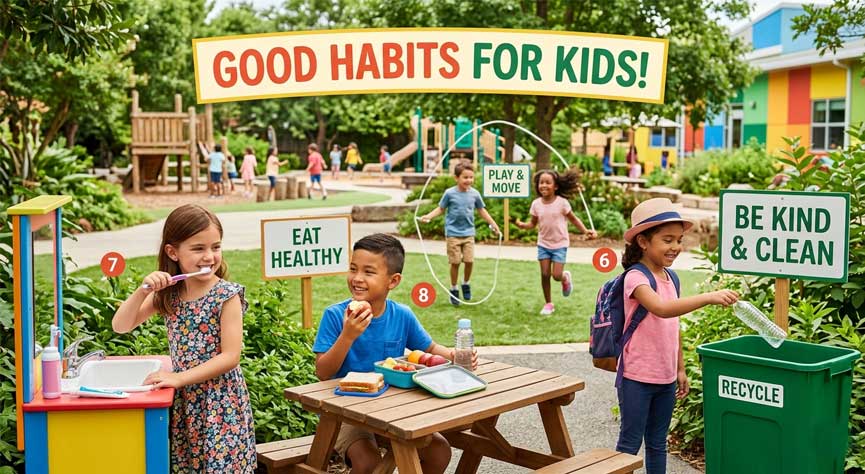
Daily routines give preschoolers security and independence.
|
Category |
Habits to Teach |
How to Make It Stick |
|---|---|---|
|
Morning |
|
Use a picture chart with 3 steps. Race a 2-min song. |
|
Hygiene |
|
Teach the “Happy Birthday” handwashing song = 20 sec. |
|
Mealtime |
|
Give them a job: put napkins out, push in chair |
|
Evening |
|
“5-Minute Cleanup Game” with a timer |
|
Responsibility |
|
Sticker chart → 7 stickers = choose movie night |
Good Manners to Practice Daily
The “Magic Words” + actions matter more than long lectures.
The Big 5 Magic Words
- Please – when asking
- Thank you – when receiving
- Sorry – when you hurt/mistake
- Excuse me – to get attention or pass by
- Welcome/You’re welcome – after “thank you”
Social Manners
- Greet people: “Hi” + eye contact + smile when meeting someone
- Wait your turn: Practice with board games, slides at the park
- Share & take turns: Use a timer: “Your turn for 2 minutes, then Didi’s turn”
- No interrupting: Teach them to put a hand on your arm if you’re talking. You put your hand on theirs = “I see you, wait 1 min”
- Table manners: Chew with mouth closed, no toys at table, “May I be excused?”
- Respect things: Books stay on shelf, we ask before using someone’s toy
- Kind words only: No name-calling. We say “I don’t like that” instead of “You’re bad”
3 Tips to Actually Make It Work
- Model it: Kids copy you. Say “please” to them and “thank you” to the delivery person. They notice.
- Catch them being good: “I loved how you said thank you to Dadi. That was so polite!” > nagging about what they forgot.
- Keep it 1 at a time: Master handwashing for 2 weeks before adding “make your bed”. Overwhelm = shutdown.
Tips for Parents & Caregivers
- Lead by Example: Kids mirror adults. Show the habits you want to see.
- Start Small & Be Consistent: Introduce 1–2 new habits at a time. Use visual charts or reward systems initially, then transition to intrinsic motivation.
- Make It Fun: Turn habits into games, use stickers for younger kids, or apps/trackers for older ones.
- Age-Appropriate Expectations: Toddlers focus on basics (hygiene, routines); school-age kids can handle chores and simple goals; teens benefit from autonomy and time management.
- Patience & Positivity: Habits take weeks/months to form. Focus on progress, not perfection. Use natural consequences more than lectures.
Time Management & Productivity Habits
- Organized Workspace: Keep a dedicated, tidy spot for homework or creative activities.
- Limited but Focused Study: Short, consistent practice sessions (Pomodoro-style for older kids: 25 minutes work + short break).
- Goal Setting: Help them set small, achievable goals (e.g., “read one chapter today” or “practice piano 3 times this week”) and track progress.